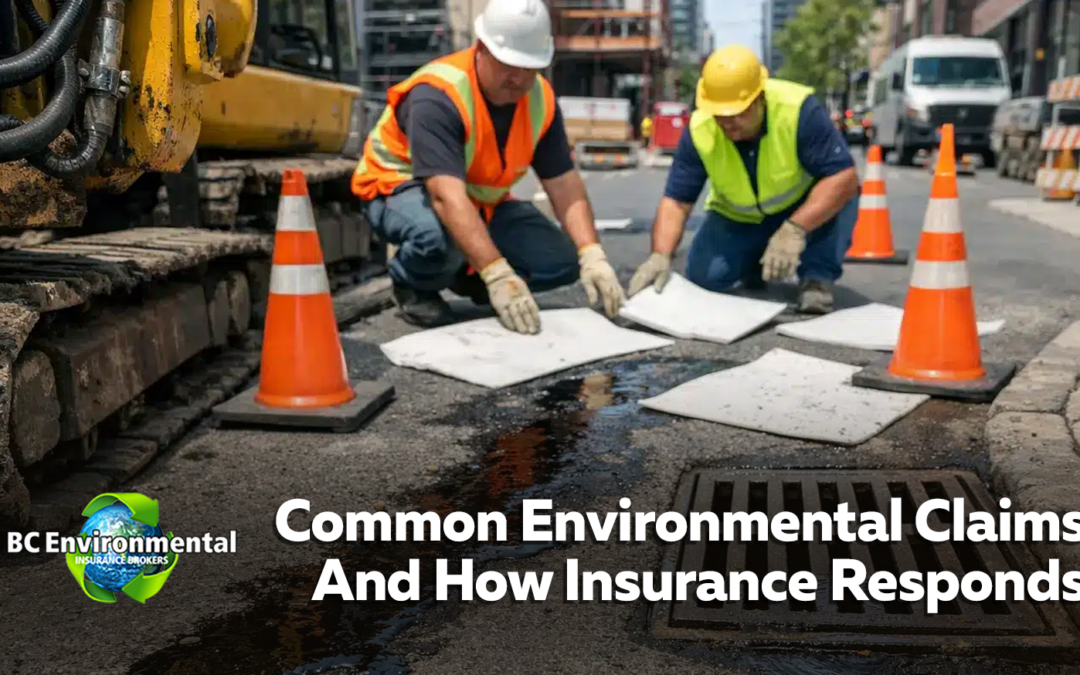
What would you do if a soil test found contamination under your property and regulators demanded immediate cleanup?
Common Environmental Claims And How Insurance Responds
You manage a site, a contracting firm, a lab, or a real estate transaction and an environmental problem appears — chemicals in groundwater, lead paint exposure, a spill from a delivery truck, or legacy contamination discovered during a sale. Knowing the typical environmental claims, how insurers respond, and what you can do to protect your business is essential. This guide explains common environmental claims, policy mechanics (including the pollution exclusion and CGL policy limits), claim investigation factors, remediation processes, and practical steps to manage and transfer environmental risk.
What are the most common environmental claims?
Environmental claims generally arise from releases of hazardous substances that create environmental hazards, property damage, bodily injury, or regulatory liability. Common claim types include:
- Sudden spills and transportation releases (truck rollovers, tanker leaks).
- Soil and groundwater contamination from industrial operations, underground storage tanks (USTs), or legacy disposal.
- PFAS/forever chemicals discovered in soil, groundwater, or drinking water.
- Lead poisoning claims related to renovation, demolition, or housing stock.
- Asbestos claims from building materials disturbed during work.
- Contractor errors during remediation or construction that spread contamination.
- Third-party bodily injury (e.g., chemical exposure) and property damage claims.
- Real estate transactional discoveries (Phase I/II triggers) leading to cleanup obligations.
- Products pollution (contaminants from manufactured products released into the environment).
- Illegal dumping, waste mismanagement, or hazardous hauler incidents.
These claims can trigger EPA regulations and state cleanup programs, requiring remediation, long-term monitoring wells, and potentially long-duration liability for aquifer contamination or recurring contamination plumes.
Quick view: claim types, triggers, and likely insurance responses
| Claim Type | Typical Trigger | Insurance Response (common) |
|---|---|---|
| Sudden transportation spill | Highway accident, tanker breach | CGL may respond if “sudden and accidental” fits and pollution exclusion not absolute; commercial auto/haulage policies involved |
| Soil/groundwater contamination | Discovery during Phase I/II, regulatory sampling | Site Pollution/Environmental Liability policies cover remediation; CGL often excluded |
| PFAS discovery | Drinking water exceedance, state MCL or EPA sampling | Coverage contested; environmental liability policies increasingly needed |
| Lead poisoning | Renovation, housing exposure | Lead-specific endorsements or environmental policies; health claims trigger bodily injury coverage |
| Asbestos/mold | Building disturbance | Specialized coverage often required; CGL may have exclusions |
| Contractor-caused spread | Improper remediation techniques | Contractor’s professional/environmental policies and subcontractor liabilities become central |
How insurance typically responds: overview
Insurance responses depend on the policy form, the policy period, the precise language (e.g., “sudden and accidental” or pollution exclusion), and whether the claim alleges “property damage” or regulatory cleanup obligations. Two broad categories of response are common:
- Commercial General Liability (CGL) policies: often implicated when a third party sues for bodily injury or property damage. Many CGL policies contain pollution exclusions reducing or eliminating coverage for environmental cleanup and contamination claims. However, narrow exceptions (sudden accidents, limited time pollution extensions) can create coverage openings.
- Environmental Liability Insurance (site pollution, contractors pollution, products pollution): designed to respond to first-party remediation costs and third-party claims resulting from contamination. These policies are tailored to environmental hazards, often including cleanup cost coverage, regulatory defense, monitoring costs (such as installing monitoring wells), and legal liability coverage.
Insurers have duties during the claims process: to investigate, to defend if an insured triggers coverage obligations, and to communicate decisions. Expect reservation of rights letters, coverage counsel involvement, and, where appropriate, tendering of defense or payment under the policy terms.
Pollution exclusion and the role of CGL policy
Most CGL policies include a pollution exclusion that limits coverage for “pollutants” discharged into the environment. The exclusion wording and judicial interpretation determine whether the insurer must pay. Key considerations include:
- Whether the release was “sudden and accidental” (some CGLs carve out sudden releases).
- If the damage alleged is “property damage” or statutory cleanup costs (courts differ on whether cleanup mandated by regulators is damages).
- Known vs unknown conditions at policy inception — “known loss” or “prior pollution” exclusions can bar coverage.
- Whether the release occurred during the policy period and causation linking the release to the insured’s operations.
Because of these nuances, many insureds purchase environmental liability insurance for explicit first-party cleanup coverage and broad third-party legal liability for environmental hazards.
CGL policy vs Environmental Liability Insurance: a side-by-side
| Topic | CGL Policy (Commercial General Liability) | Environmental Liability Insurance |
|---|---|---|
| Primary focus | Third-party bodily injury/property damage | First-party cleanup costs + third-party claims |
| Pollution Exclusion | Often excludes pollution; limited exceptions | Designed to cover pollution events; tailored coverage forms |
| Regulatory cleanup costs | Frequently excluded or disputed | Typically included up to policy limits |
| Monitoring costs | Usually excluded | Often covered (monitoring wells, lab work) |
| Lead/Asbestos/PFAS | Frequently excluded or limited | Can be endorsed to include or exclude depending on underwriting |
| Coverage for contractor mistakes | May be limited | Contractors pollution policies exist for this exposure |
Key claim investigation factors you should expect
When a claim arises, the insurer and you will evaluate multiple factors to determine coverage and remediation strategy:
- Date of discovery and policy period(s) — when did the contamination occur versus when it was identified?
- Nature of contamination — hazardous substances present, concentration, and whether EPA regulations or state MCLs are triggered.
- Triggering event — sudden spill vs gradual historical release; influences applicability of pollution exclusions.
- Phase I Assessment and Phase II data — the Phase I Assessment informs historical operations; Phase II sampling quantifies contamination (soil and groundwater remediation needs).
- Regulatory involvement — has the EPA, state agency, or local authority issued orders? Orders often trigger cleanup obligations.
- Extent of contamination — contamination plume, aquifer contamination, off-site migration, receptor exposure (drinking water wells).
- Health impacts — lead poisoning claims, bodily injury allegations, and potential class actions.
- Responsible parties and subcontractor liabilities — contract language, indemnity, and whether the subcontractor’s actions caused or worsened contamination.
- Evidence chain of custody — sampling protocols and lab reports; critical for subrogation and litigation.
- Policy language — exclusions, endorsements, retroactive dates, and aggregate limits.
A Phase I Assessment is frequently your first line of defense for due diligence in transactional and operational risk management. If Phase I identifies recognized environmental conditions, you’ll likely proceed to Phase II sampling and targeted remedies.
The role of environmental audits and Phase I/II Assessments
You should treat environmental audits (Phase I and Phase II) as risk management tools. A Phase I Assessment evaluates historical operations, spills, or storage that may create recognized environmental conditions. If Phase I flags concerns, a Phase II Assessment (sampling and testing) confirms contamination levels and helps scope remediation.
Insurers often require Phase I/II reports to evaluate underwriting risk or to defend against claims that a condition was “known” before coverage began. Environmental audits can influence coverage availability, premiums, policy retroactive dates, or exclusions during renewal.
Allocating cleanup costs and subrogation
Cleanup cost allocation is a core dispute driver, especially where multiple parties, subcontractors, and prior owners are involved. Key concepts:
- Polluters Pay and PRP allocation: Under CERCLA (federal law) and many state programs, liable parties (Potentially Responsible Parties — PRPs) can face joint and several liability. That means one party can be forced to pay for the entire cleanup and then seek contribution from others.
- Allocating cleanup costs across multiple insurers: when multiple policy periods or insurers are implicated, allocation rules (pro rata, pro rata with setoff, or joint-and-several apportionment depending on jurisdiction) determine who pays what.
- Subrogation: After an insurer pays cleanup costs, it may pursue subrogation against responsible third parties (suppliers, transporters, contractors, prior owners) to recover amounts paid. Strong documentation (sampling, chain of custody, contractual obligations) is critical for successful subrogation.
- Contractual indemnities: Contracts with subcontractors and vendors should clearly define indemnity obligations and insurance requirements to support allocation and recovery.
Subcontractor liabilities and contractual obligations
If a subcontractor performs work that causes or spreads contamination, their insurance and contractual indemnities are often the first recovery source. To protect yourself:
- Require proof of appropriate environmental liability insurance, including limits, retroactive dates, and endorsements.
- Include indemnity clauses that obligate the subcontractor to defend and indemnify you for contamination they cause.
- Clarify whether the subcontractor is responsible for long-term monitoring wells or aquifer contamination remediation if their work triggers migration.
Failing to require such protections can leave you financially responsible depending on state law and the contractual allocation of risk.
Policy exclusions and legal liability in environmental cases
Policy exclusions frequently control outcomes in environmental claims. Common exclusions include:
- Pollution exclusion (broad) — excludes pollution-related property damage and cleanup costs.
- Known conditions/prior pollution — excludes losses known before coverage.
- Contractual liability exclusions — may exclude liabilities assumed under contract unless an exception applies.
- Intentional acts or wilful misconduct exclusions.
- Exclusions for specific substances (e.g., PFAS, lead, asbestos) in some policies.
Legal liability in environmental cases can be statutory (cleanup ordered by regulators) or common-law (tort claims for property damage or bodily injury). Courts vary on whether statutory cleanup obligations constitute “damages” under liability policies. That ambiguity often results in litigation between insureds and insurers over coverage.
Insurer obligations during the claims process — what you should expect
When you report a claim, insurers have both contractual and often regulatory obligations to respond responsibly. Key insurer duties include:
- Prompt investigation: insurers should investigate the claim diligently, including ordering Phase II sampling and engaging environmental consultants.
- Duty to defend: where a third-party suit alleges covered injuries or property damage, insurers generally must defend until coverage is shown not to apply.
- Communication and transparency: insurers should provide status updates, reserve explanations, and clear reasons for any reservation of rights or denial.
- Payment of covered costs: once coverage is established, insurers should pay reasonable remediation costs, including monitoring wells, lab fees, and consultant work.
- Subrogation actions: insurers pursuing subrogation should coordinate with you to avoid jeopardizing your claims against other parties.
If an insurer unreasonably delays or denies coverage, many states provide bad faith remedies. Document all communications and keep records of remediation plans, invoices, and regulatory directives.
Case studies of successful claim settlements (realistic examples)
Below are three anonymized, realistic case studies showing how claims often resolve when proactive steps are taken.
Case Study 1 — Real Estate Transaction Discovery
- Situation: During a commercial property sale, a Phase I Assessment flagged potential petroleum contamination. Phase II sampling confirmed soil and groundwater contamination migrating off-site toward a municipal well.
- Insurance response: The buyer’s site pollution policy, purchased during escrow with a retroactive date extending before discovery, covered first-party cleanup costs. The insurer funded immediate containment measures (temporary monitoring wells and interim remediation), coordinated with the state agency, and negotiated a remedial action plan.
- Outcome: Cleanup costs were paid under the environmental liability policy; the insurer subrogated against the seller under contract provisions and recovered a portion of the cleanup costs. Lessons: timely Phase I/II, appropriate environmental insurance in transactions, and contractual representations accelerate resolution.
Case Study 2 — Contractor Spread Contamination
- Situation: An environmental contractor improperly handled excavated soil and inadvertently spread contamination, triggering a plume affecting neighboring properties and an aquifer. Neighboring homeowners filed claims for property devaluation and health testing.
- Insurance response: The contractor’s pollution liability and contractor’s pollution policies responded to third-party claims and funded remediation, including soil and groundwater remediation and monitoring wells. The contractor’s CGL was initially contested due to pollution exclusion, but the pollution liability policy covered the bulk of costs. The insurer controlled defense and engaged technical experts.
- Outcome: Insurer-paid remediation and settlement with neighbors resolved claims efficiently. The insurer pursued subrogation against a subcontractor whose equipment failed and caused the spread. Lessons: ensure subcontractor coverage, specify indemnity, and maintain contractor pollution insurance.
Case Study 3 — PFAS at Manufacturing Site
- Situation: A manufacturer discovered elevated PFAS concentrations in on-site drainage and off-site groundwater using routine monitoring required by the permitting authority. State regulators issued an order requiring an interim removal and long-term remediation plan.
- Insurance response: Coverage disputes arose under the CGL pollution exclusion, but the company’s environmental liability policy included coverage for emerging contaminants by endorsement. The insurer funded investigation, remediation design, installation of monitoring wells, and negotiated with the state.
- Outcome: Policy limits covered significant remedial costs; the insured and insurer negotiated a structured settlement with the regulator. Lessons: policy wording for emerging contaminants matters; tailored endorsements can preserve coverage for PFAS-related remediation.
Differences in state-level regulations — what you need to know
State laws significantly affect environmental claims and cleanup allocation:
- California: strict water quality standards, active Department of Toxic Substances Control (DTSC) oversight, and robust hazardous substance cleanup programs. California’s CLRA and other consumer protections can increase liability exposure for manufacturers.
- New York: Brownfield Cleanup Program offers incentives and potential liability protections if you follow program steps; state-level MCLs and aggressive enforcement can accelerate claims.
- Texas: TCEQ offers voluntary cleanup and risk-based corrective action approaches; statutory frameworks differ for groundwater and aquifer protections.
- PFAS differentiation: states like Michigan and New Jersey have set stricter state-level PFAS limits than federal guidance in some cases, affecting when cleanup obligations are triggered.
These differences influence how quickly regulators act, whether you can enroll in voluntary cleanup programs, and the strength of statutory defenses. Insurers factor state regulatory frameworks into underwriting and claims handling.
Impact of recent environmental legislation and regulation
Recent legislative and regulatory trends have sharpened environmental exposures:
- EPA actions on PFAS and other contaminants: Proposed and final regulatory steps increase the number of sites requiring remediation, expand potential liability, and raise cleanup cost estimates.
- Infrastructure and remediation funding: Federal infrastructure investments and state grant programs provide funding for certain cleanups but also increase oversight and reporting requirements.
- Tightening water and drinking standards: Lower allowable concentrations for contaminants can expand sites that trigger remediation obligations.
- State laws expanding hazardous substance lists and lowering reporting thresholds increase the frequency of reportable releases.
For you, this means more potential claims, evolving standards for remediation, and the need for policies that address newer contaminants and regulatory expectations.
Future trends in environmental insurance claims
Expect shifts that will affect how claims are underwritten and handled:
- Greater frequency of PFAS and emerging contaminant claims; insurers will develop specific endorsements and pricing.
- Climate change impacts: flooding, storm surge, and extreme weather can mobilize contaminants (e.g., contaminated sediments) and increase claims.
- Technology-driven monitoring: remote sensors, more frequent sampling, and improved modeling will change detection timing and the scope of remediation.
- Insurer analytics: predictive modeling will better price risk by location, industry, and contaminant type.
- Broader risk transfer products: more tailored forms for restoration contractors, hazardous haulers, and niche exposures such as laboratories or weatherization contractors.
Understanding these trends helps you stay competitive and minimize surprises in claims.
Practical steps you should take to manage environmental risk and reduce insurance disputes
- Maintain environmental audits: Perform Phase I and Phase II assessments during acquisitions and periodically for operations.
- Align insurance to risks: Purchase environmental liability insurance that covers first-party cleanup, third-party claims, monitoring wells, and emerging contaminants where necessary.
- Check policy retroactive dates and limits: Retroactive dates determine coverage for historical contamination; policy limits must match realistic remediation costs.
- Tighten contracts with subcontractors: Require proof of pollution liability, clear indemnities, and limits that match potential exposures.
- Establish incident response plans: Rapid response reduces contamination spread and supports coverage defenses about mitigation.
- Document everything: Sampling chain of custody, contractor records, regulatory correspondence, and remediation steps are invaluable for coverage and subrogation.
- Coordinate with counsel and consultants: Use environmental consultants for technical support and coverage counsel for insurer negotiations and reservation-of-rights issues.
When disputes arise: mediation, allocation and litigation
If coverage is denied or disputed, resolution paths include:
- Early mediation or alternative dispute resolution to allocate cleanup costs.
- Apportionment among multiple insurers across policy years (using approaches such as pro rata allocation or joint-and-several depending on jurisdiction).
- Litigation when necessary; documented Phase I/II records, chain of custody, and contractual indemnities support litigation strategy.
- Regulatory negotiation — sometimes negotiating a remedial action plan with the regulator reduces costs and clarifies responsibilities, helping both insurer and insured.
Final checklist: What to have when you report an environmental claim
- Phase I/II reports and any environmental audits.
- Incident reports and dates of discovery.
- Sampling results, chain of custody documents, and lab reports.
- Contracts with vendors and subcontractors (insurance requirements and indemnities).
- Regulatory notices, orders, and communications.
- Insurance policies (CGL, environmental liability, auto, contractor policies) with declarations pages and endorsements.
- Records of mitigation actions (temporary containment, monitoring well installation).
Prompt, thorough documentation improves insurer response and increases chances of a fair and efficient resolution.
How BC Environmental Insurance helps
BC Environmental Insurance specializes in protecting businesses, property owners, and contractors from environmental liabilities. You can get tailored coverage for many unique exposures, including:
- Environmental Consultants & Engineers
- Laboratories
- Products Pollution
- Environmental Contractors
- Hazardous Haulers Transportation
- Asbestos, Lead & Mold Coverage
- Site Pollution Risks
- Weatherization Contractors
- Restoration Contractors
- Real Estate Transactional Coverage
Your insurance should match the scope of your environmental hazards, contractual obligations, and regulatory exposures. We help you understand policy language (including pollution exclusions and CGL interactions), obtain environmental liability insurance with appropriate retroactive dates and endorsements, and manage claims—coordinating remediation, subrogation, and allocation strategies where necessary.
Find out how BC Environmental Insurance Services can help you! Call us at (800) 257-1639 to discuss your Environmental Insurance Service needs.