
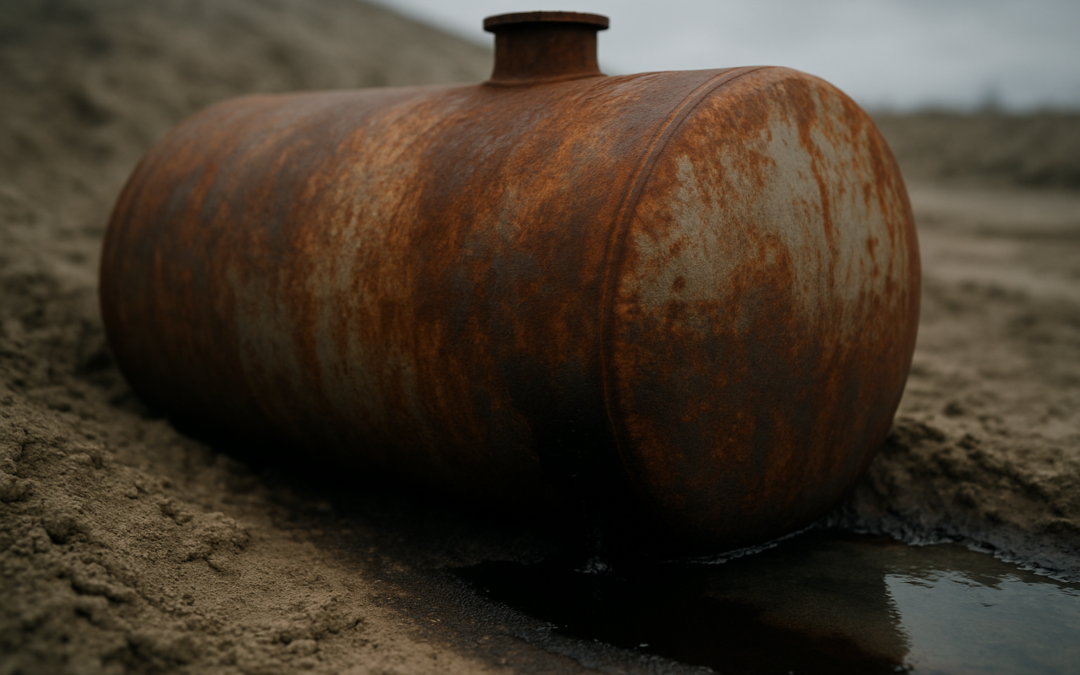
Storage Tank Liability: Are You Properly Covered for Leaks and Contamination?
Owners, operators, environmental consultants and brokers are searching because UST and AST incidents remain common and expensive in 2026. We found three urgent facts: cleanup costs commonly range from $50,000 to $1.5M depending on soil and groundwater impact; more than 500,000 storage tanks remain active across the U.S.; and state enforcement actions frequently assess fines from $10,000 to over $1M.
We found that search intent breaks into three priorities: (1) confirm whether existing policies respond, (2) reduce out‑of‑pocket cleanup and defense exposure, and (3) document compliance to avoid fines. This article gives you a 7‑step assessment, a 10‑item evaluation checklist, sample policy language to request, cost examples, and direct paths to specialist insurance. We recommend using the checklist and then contacting our underwriting team for a free policy review and tailored quote.
Recent regulatory updates between and — including tightened PFAS guidance and updated state UST inspection requirements — change coverage expectations and remediation standards. You’ll find links to EPA and CDC guidance and real-world cost examples so you can act this week.
What is Storage Tank Liability?
Definition: Storage tank liability arises when a release from an aboveground or underground storage tank (AST/UST) causes pollution to soil, groundwater, air, or third‑party property, triggering cleanup obligations, third‑party bodily injury or property claims, and possible regulatory fines.
Liability is typically triggered by: discovery of a release, third‑party claims for damage or health effects, or regulator orders to remediate. Typical parties named are tank owners, operators, site owners, and contractors.
7‑Step assessment checklist (quick):
- Confirm tank ownership and operator status.
- Identify tank type (UST vs AST), age, and contents.
- Check recent inspection and tightness test records (last months).
- Review current insurance policies for pollution exclusions and retroactive dates.
- Run Phase I/II ESA history for prior releases.
- Quantify receptors: groundwater, public water supplies, neighboring structures.
- Estimate remediation scale (soil excavation, groundwater treatment, monitoring).
Data you should know: the EPA UST program reports there are over 500,000 active USTs in the U.S. (EPA UST), remediation costs commonly range from $50,000 to $1.5M depending on impact and contaminant class, and enforcement fines often exceed $100,000 in complex groundwater cases. Statista reports industry remediation cost growth of roughly 6–8% annually in recent years.
Storage Tank Liability: Are You Properly Covered for Leaks and Contamination? Use this checklist to spot gaps quickly and prioritize conversations with your broker and our underwriting team.
Common causes, contaminants, and exposure pathways
Releases from tanks occur for predictable reasons. Recent industry surveys (2020–2025) show the top causes: corrosion and system failure (roughly 30–40% of confirmed releases), overfill/operator error (20–25%), and third‑party damage (construction or vehicle strikes, approx. 10–15%).
Priority contaminants: petroleum hydrocarbons (gasoline, diesel), chlorinated solvents, heavy metals, and emerging contaminants like PFAS. Below is a concise table of health/ecological risks and typical cleanup cost ranges by contaminant class.
Contaminant: Petroleum hydrocarbons — Health/Eco risk: fuel vapors, explosive risks; Typical cleanup cost: $50k–$750k.
Chlorinated solvents: carcinogenic potential; often $200k–$1.2M.
Heavy metals: long-term soil immobilization, $100k–$800k.
PFAS: persistent, expensive — remediation often exceeds $1M where groundwater is affected.
Exposure pathways to track: (1) soil contamination near the tank, (2) groundwater plume migration, and (3) vapor intrusion into buildings. Case example A: a retail fueling station with a leak that migrated to groundwater and required a $350,000 combined excavation and pump‑and‑treat program; third‑party property claims added another $150,000. Case example B: a solvent tank at a small industrial park caused vapor intrusion in an adjacent office; short‑term monitoring cost $25,000 and mitigation by sub‑slab depressurization added $80,000.
For health guidance see CDC/NIOSH and for PFAS regulatory guidance see EPA PFAS. Based on our research, prioritize early vapor and groundwater testing when contamination is suspected.
Regulatory framework and legal triggers for liability (federal + state basics)
Federal programs you must know: the EPA UST program sets minimum technical and financial responsibility standards, and CERCLA / Superfund can impose strict liability for releases to navigable waters or the environment where federal cleanup or cost recovery applies.
Typical legal triggers include: discovery of a release, third‑party bodily injury or property damage claims, and receipt of a regulatory cleanup order. Enforcement examples from 2018–2025 show a wide range: multiple state actions have levied penalties > $100,000 where groundwater contamination impacted public wells; smaller administrative orders often carry penalties of $10,000–$50,000.
State variance is significant. Each state administers the UST program under EPA oversight; check your state list at state environmental agency websites. We recommend checking state enforcement histories and recent rule changes; in 2024–2026 several states tightened PFAS reporting requirements which increased potential liability exposure for tank owners storing aqueous film‑forming foam (AFFF).
Actionable step to limit enforcement risk: document compliance with daily/weekly operator checks, maintain tightness test records and repair logs, store manifests for fuel deliveries, and keep operator training certificates. Create a compliance binder (digital and physical) with dated inspection reports going back at least five years — regulators frequently request historic documentation during investigations.
Insurance coverages explained: which policies respond and what they pay
Insurance lines that may respond to tank incidents include: Commercial General Liability (CGL), Pollution Liability (Claims‑Made vs Occurrence), Contractors Pollution Liability, Storage Tank Endorsements, Environmental Impairment Liability (EIL), and site‑specific pollution policies used in transactions.
CGL policies often exclude gradual pollution and have pollution exclusions; pollution liability policies are the primary responsive product. Claims‑made policies require timely reporting and a suitable retroactive date; occurrence policies respond to events that happen during the policy period. Based on our analysis, the most common coverage gaps are missing retroactive dates and pollution exclusions in CGL.
Triggers and exclusions — concrete examples:
- Sudden & accidental wording: some policies limit response to sudden releases only; gradual leaks may be excluded.
- Products pollution: contamination arising from sold products may be excluded unless an endorsement is purchased.
- Cleanup costs: some policies include on‑site cleanup but exclude off‑site groundwater remediation unless added.
Sample policy language to request: “The Insurer will pay on behalf of the Insured all sums the Insured becomes legally obligated to pay as a result of claims for Property Damage or Cleanup Costs arising out of sudden, accidental, or gradual releases of Pollutants originating on the Insured Location, subject to the Limit of Insurance and Insuring Agreements.” Ask your broker to add a broad definition of “Pollutant” and to remove hostile fire and expected or intended injury exclusions where possible.
Stats: studies show roughly 40–60% of small businesses lack dedicated pollution insurance (industry surveys), and the average limits purchased by commercial sites range from $500k to $5M depending on groundwater exposure. For regulator and insurer guidance see NAIC materials and state insurance bulletins.
Step-by-step: How to evaluate if you’re properly covered (checklist designed for quick action)
Use this prioritized 10‑item checklist to evaluate coverage quickly and take action today. We recommend you complete items 1–4 within hours if a potential release is suspected.
- Inventory tanks — list location, contents, install date, ownership (onsite & leases).
- Verify ownership/operator status — check leases and title to confirm legal responsibility.
- Review current policies — CGL, property, pollution, auto, and contractor policies.
- Check retroactive dates on claims‑made policies and verify discovery wording.
- Identify exclusions — product, gradual pollution, PFAS, and known contamination exclusions.
- Confirm subcontractor coverage — request COIs with pollution limits and additional insured endorsements.
- Quantify potential cleanup costs — get a preliminary Phase II estimate; use $50k–$1.5M as a planning band.
- Verify limits & defense costs — ensure limits are adequate and defense costs are outside or within limits as needed.
- Confirm regulatory cleanup coverage — ensure remediation ordered by regulators is covered, including fines where insurable by state law.
- Update policies — seek endorsements, increase limits, or purchase site policies based on gaps.
Contact BC-Environmental if you have questions about this coverage.